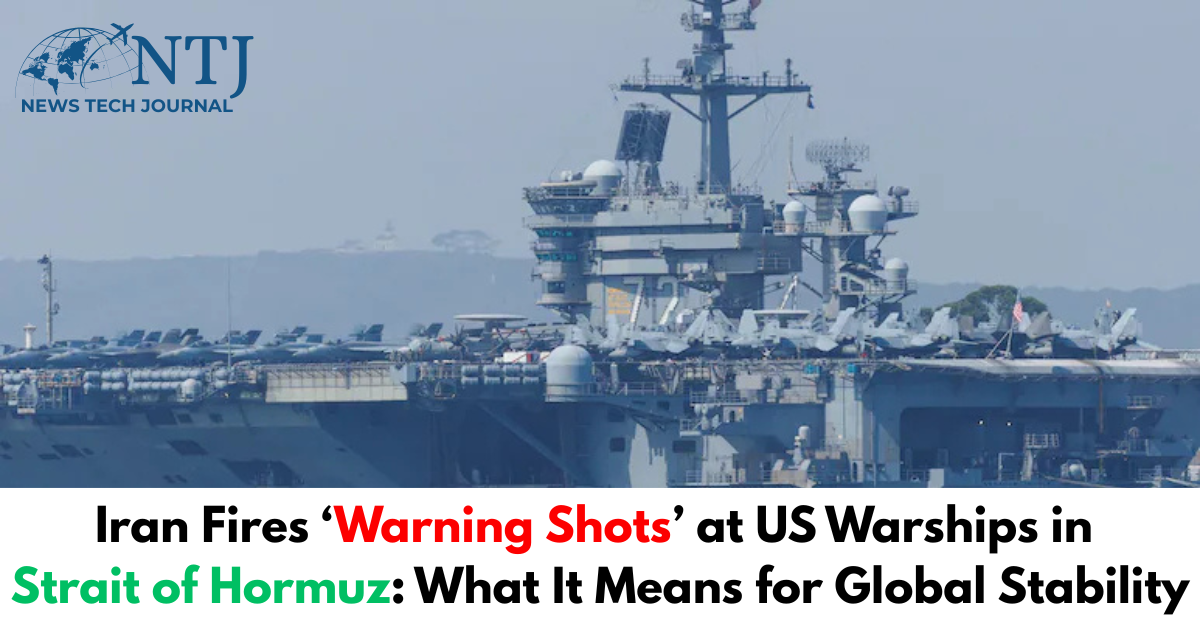
Tensions in the Middle East have escalated sharply after Iran reportedly fired “warning shots” at US warships in the Strait of Hormuz, one of the world’s most critical oil routes. The incident comes amid rising geopolitical conflict and highlights growing risks to global trade, energy supply, and regional stability.
According to reports, Iranian naval forces used missiles, drones, and rockets as a warning after US vessels entered the strategic waterway.
What Happened in the Strait of Hormuz?
Iran’s navy claimed it issued warnings to US warships before firing “warning shots” when those warnings were ignored. The move was described as a defensive action to prevent foreign military presence in the area.
At the same time, the US denied claims that any of its ships were hit, creating conflicting narratives around the incident.
This development is linked to a broader US effort to escort commercial vessels through the Strait, where hundreds of ships remain stranded due to ongoing tensions.
Why the Strait of Hormuz Matters
The Strait of Hormuz is one of the most important maritime chokepoints in the world. Nearly 20% of global oil supply passes through this narrow waterway, making it vital for international trade and energy markets.
Any disruption in this region can lead to:
- Rising global oil prices
- Supply chain disruptions
- Increased shipping risks
- Economic uncertainty worldwide
Recent reports already show oil prices reacting to the tensions, highlighting how sensitive markets are to events in the region.
Impact on Global Business and Economy
The situation has significant implications for businesses and global markets:
1. Energy Market Volatility
Oil prices are highly sensitive to geopolitical tensions. Any escalation can lead to immediate price spikes, affecting industries worldwide.
2. Shipping and Trade Risks
With hundreds of vessels stranded or rerouted, global supply chains face delays and increased costs.
3. Investment Uncertainty
Geopolitical instability often leads to cautious investor behavior, impacting stock markets and global trade confidence.
Geopolitical Tensions Rising
The incident reflects a broader power struggle between Iran and the United States. Iran has warned that any unauthorized entry into the Strait will be considered a violation and could trigger further action.
Meanwhile, the US continues efforts to ensure safe passage for commercial ships, increasing the risk of further confrontations.
Conclusion
The report that Iran fired warning shots at US warships in the Strait of Hormuz marks a critical moment in global geopolitics. While no confirmed damage has been reported, the situation underscores how fragile the region remains.
For businesses, investors, and policymakers, the key takeaway is clear: geopolitical tensions can quickly impact global markets, energy prices, and supply chains. Monitoring developments in the Strait of Hormuz will be crucial in the coming weeks.