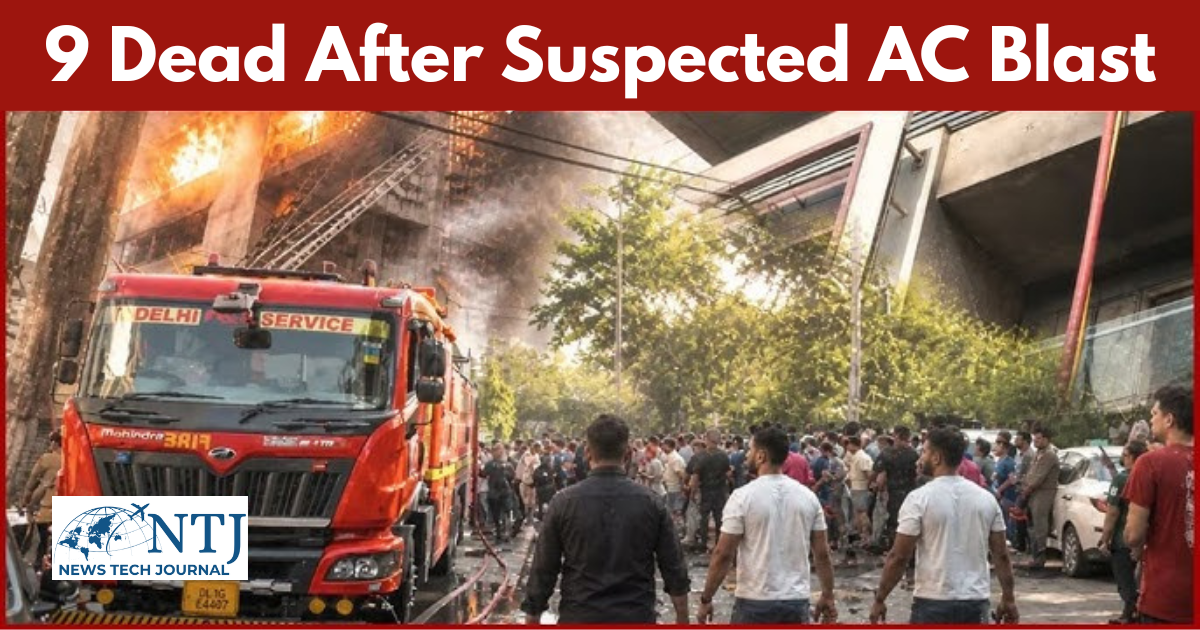
A tragic fire incident in Vivek Vihar has shocked the nation, leaving at least nine people dead after a suspected air conditioner (AC) blast triggered a massive blaze in a residential complex. The incident highlights serious concerns around electrical safety, building preparedness, and fire prevention measures in urban housing societies.
What Happened in Vivek Vihar Fire Incident
According to initial reports, the fire broke out late at night in a residential building in Vivek Vihar, East Delhi. Authorities suspect that an AC unit explosion may have sparked the fire, which quickly spread across multiple floors due to flammable materials and lack of immediate containment.
Residents reported hearing a loud blast before flames engulfed parts of the building. Emergency services responded swiftly, but the intensity of the fire made rescue operations extremely challenging.
Casualties and Rescue Operations
The tragic incident resulted in the loss of nine lives, with several others injured due to burns and smoke inhalation. Firefighters and rescue teams worked for hours to evacuate trapped residents and control the flames.
Local authorities, along with fire department officials, conducted search and rescue operations to ensure no one remained trapped inside the building. Injured victims were rushed to nearby hospitals for treatment.
Possible Cause: AC Blast and Fire Safety Concerns
While the exact cause is still under investigation, early indications suggest a possible AC blast triggered by electrical faults, overheating, or poor maintenance. Such incidents are not uncommon during extreme summer conditions when air conditioners are heavily used.
Common causes of AC-related fires include:
- Faulty wiring or short circuits
- Overloaded electrical systems
- Lack of regular maintenance
- Use of substandard equipment
- Improper installation
This incident once again raises concerns about the safety standards followed in residential complexes.
Fire Safety Measures Every Household Should Follow
To prevent such tragic incidents, residents and building management must take proactive safety steps:
- Regular servicing of AC units and electrical systems
- Installation of smoke detectors and fire alarms
- Avoid overloading power sockets
- Use certified and high-quality appliances
- Ensure availability of fire extinguishers
- Conduct periodic fire safety drills
Simple precautions can significantly reduce the risk of fire accidents.
Government Response and Investigation
Authorities have launched a detailed investigation to determine the exact cause of the fire. Officials are also reviewing safety compliance in residential buildings across Delhi to prevent similar incidents in the future.
The incident has sparked discussions on stricter safety regulations, mandatory fire audits, and better emergency preparedness in urban housing societies.
Conclusion
The Vivek Vihar fire incident is a heartbreaking reminder of how quickly a small electrical fault can turn into a deadly disaster. As cities grow and energy usage increases, fire safety must become a top priority for residents, builders, and authorities alike. Awareness, proper maintenance, and adherence to safety guidelines can save lives and prevent such tragedies in the future.