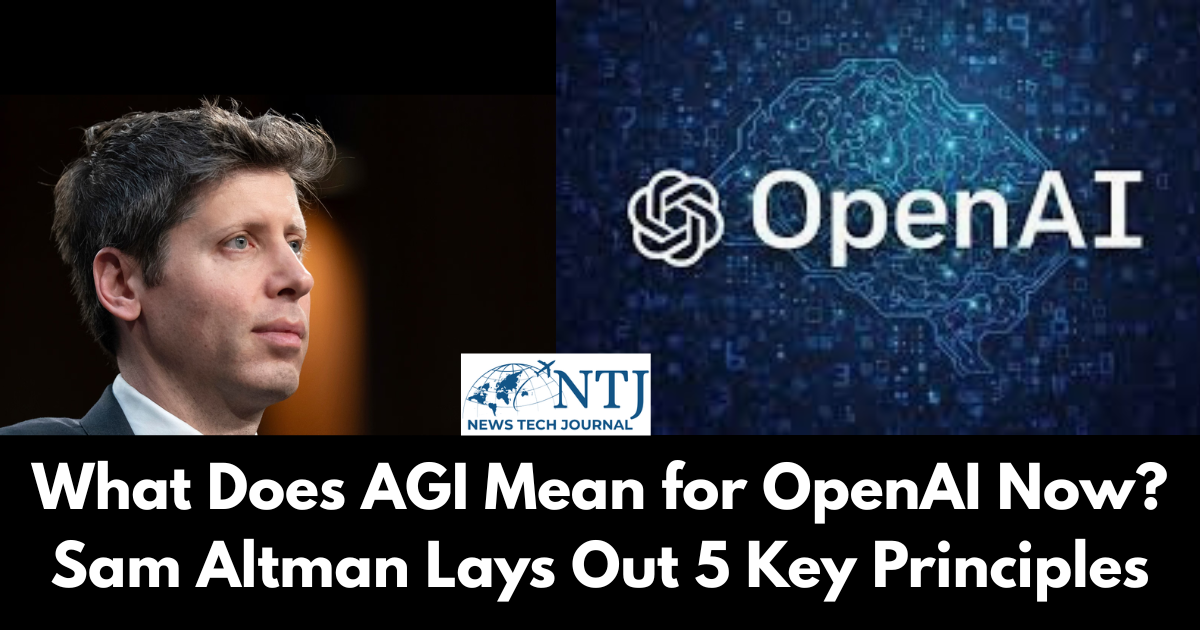
Artificial General Intelligence (AGI) is becoming one of the most important topics in the technology and business world. AGI refers to AI systems that can perform a wide range of tasks at a human-like level, rather than being limited to one specific function. Recently, Sam Altman outlined five key principles that will guide how OpenAI develops and deploys advanced AI technologies.
These principles signal a shift from simply building powerful AI to ensuring it is safe, useful, and beneficial for businesses and society.
The 5 Key Principles for AGI Development
1. Maximize Benefits for Society
The first principle focuses on ensuring that AGI delivers positive value to people, businesses, and economies. The goal is to use AI to improve productivity, innovation, and global growth rather than creating disruption.
2. Collaborate Globally
OpenAI emphasizes cooperation between governments, companies, and researchers. Working together helps reduce risks and accelerate responsible AI development.
3. Align AI With Human Values
AI systems must follow ethical standards and human intentions. This includes fairness, transparency, and responsible decision-making in business and technology.
4. Maintain Transparency
Open communication about AI progress and risks builds trust. Businesses and users need clear information to adopt AI technologies confidently.
5. Prioritize Safety
Safety remains the foundation of AGI development. Testing, monitoring, and strong safeguards are essential before deploying powerful AI systems.
What This Means for Businesses
These principles show that AI will become a core part of business operations. Companies can expect:
- Increased automation and efficiency
- Faster decision-making using data
- New opportunities for innovation
- Greater focus on responsible technology use
Businesses that adopt AI responsibly will gain a competitive advantage in the digital economy.
Conclusion
The five principles introduced by Sam Altman highlight a new direction for AI development—one focused on responsibility, collaboration, and real-world impact. For businesses and technology leaders, this shift means preparing for a future where AI is not just a tool but a strategic driver of growth and innovation.